
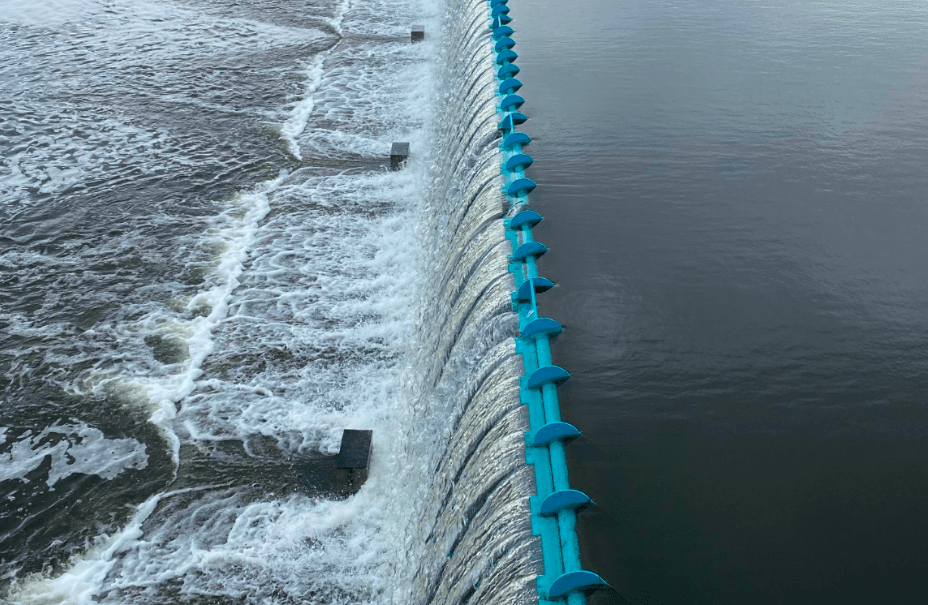
Why are locks and dams a zander eldorado?
When looking for regularly feeding predators, hydrotechnical structures should always be at the top of our list. Locks and dams are places where the water is constantly oxygenated, and current eddies disorient the baitfish carried downstream. For zander, this is an ideal diner—it doesn't have to waste energy on chasing; it just needs to position itself in the right spot and wait for an easy meal.
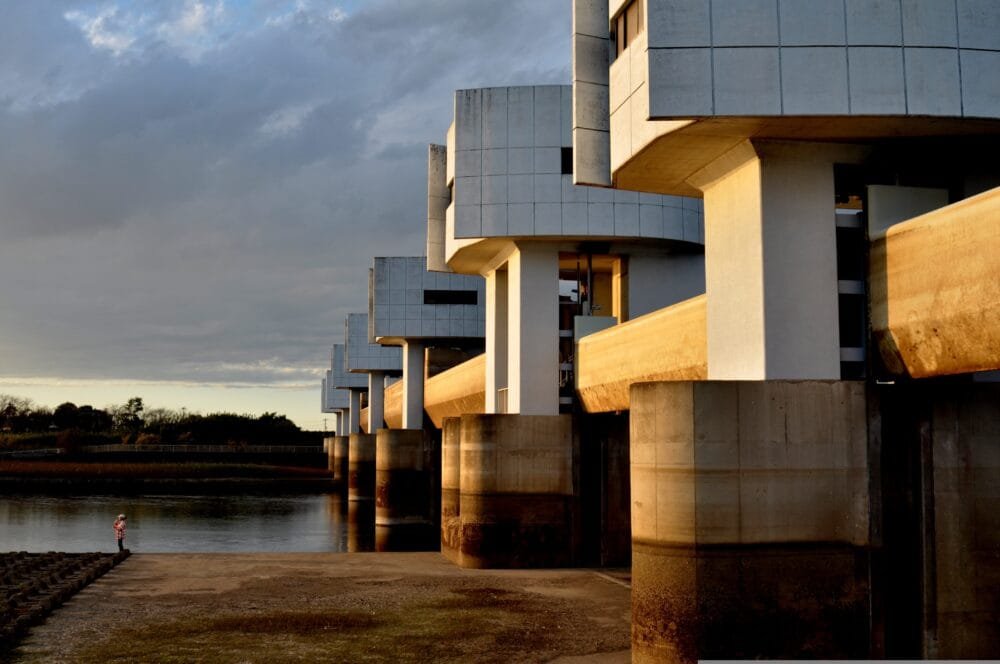
Reading the water: where exactly does the zander station?
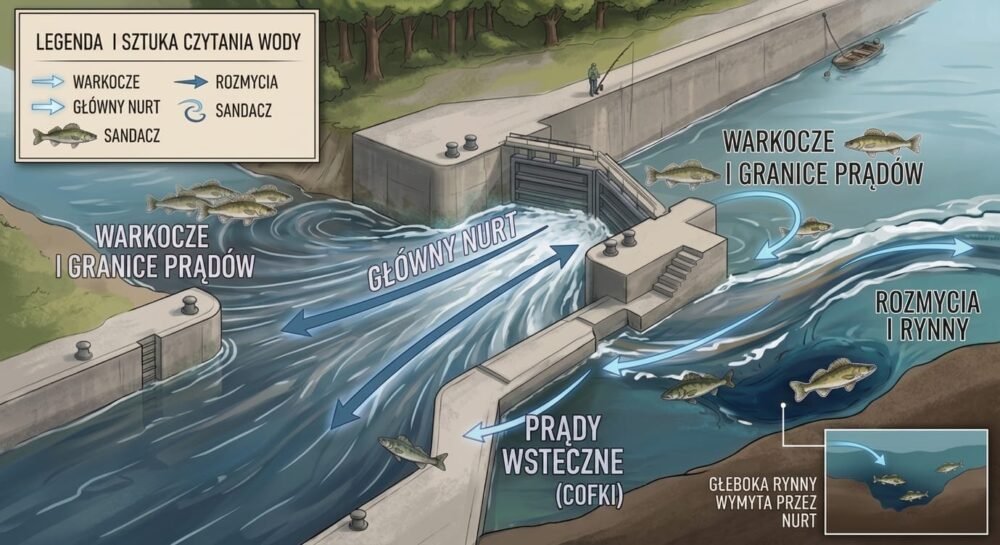
Fishing at dams is not about blind casting ahead of you. Success lies in flawlessly reading the water. Zander rarely station themselves in the main, strongest current. They much prefer spots from which they can observe that current. What are the best spots in such areas?
- Current seams and boundaries:
This is an absolute classic. Look for places where rushing water mixes with calm water. Predators love to patrol this boundary, striking from the shadows of calmer water at baitfish tossed about by the main current. - Counter-currents (eddies):
Water bouncing off concrete pillars or banks often flows back upstream along the very bottom. This is an ideal resting spot for zander. - Scour holes and trenches carved out by the current:
Dams always modify the bottom. Look for drop-offs and troughs that the water has carved out just downstream from the hydro-engineering structure. - Shadows cast by structures:
Zander have exceptionally sensitive eyesight and avoid harsh light. Any shaded spot under a pillar, span, or concrete wall is always worth a few casts.
Techniques and gear: how to outsmart the zander?
Zander fishing at dams is an art of adaptation. Although classic jigging with lead head jigs is the absolute foundation of this method, the hard bottom and rocky riprap around the pillars can be merciless to your fishing wallet. To avoid losing handfuls of lures and to successfully tempt a predator, it pays to react flexibly to the conditions in the fishery.
1. How to effectively avoid snags?
When rocks "devour" tackle set after tackle set, it is worth moving away from traditional jig heads in favor of solutions for special tasks:
- Offset hooks (weedless): Instead of classic jig heads with an exposed hook gap or additional stingers, go for an offset hook with the point hidden inside the softbait's body (e.g., with a cheburashka rig). This solution allows you to safely thump the bottom even when it is heavily littered with boulders.
- Drop Shot Method: An excellent alternative to hard bottom bouncing. It allows the lure to be presented just above obstacles without the risk of the sinker getting stuck in a crevice. Casting the lure into a current seam or a shaded area and slowly nibbling it on the spot often provokes a strike from a lazy fish that is just waiting for food to drift right to it.
2. Hair jigs – a weapon for hard, cleaner bottoms
A great and extremely effective option – though recommended mainly when the bottom is less snaggy – are zander hair jigs.
- Natural action in the current: Their fall remains extremely natural and vertical even in a strong current downstream of a dam, where a traditional softbait might roll over onto its side.
- Provocation by sound: Heavy, hard impacts of the lead jig head against the bottom generate a hydroacoustic wave that draws attention and provokes aggressive strikes from zander feeding right on the bottom.
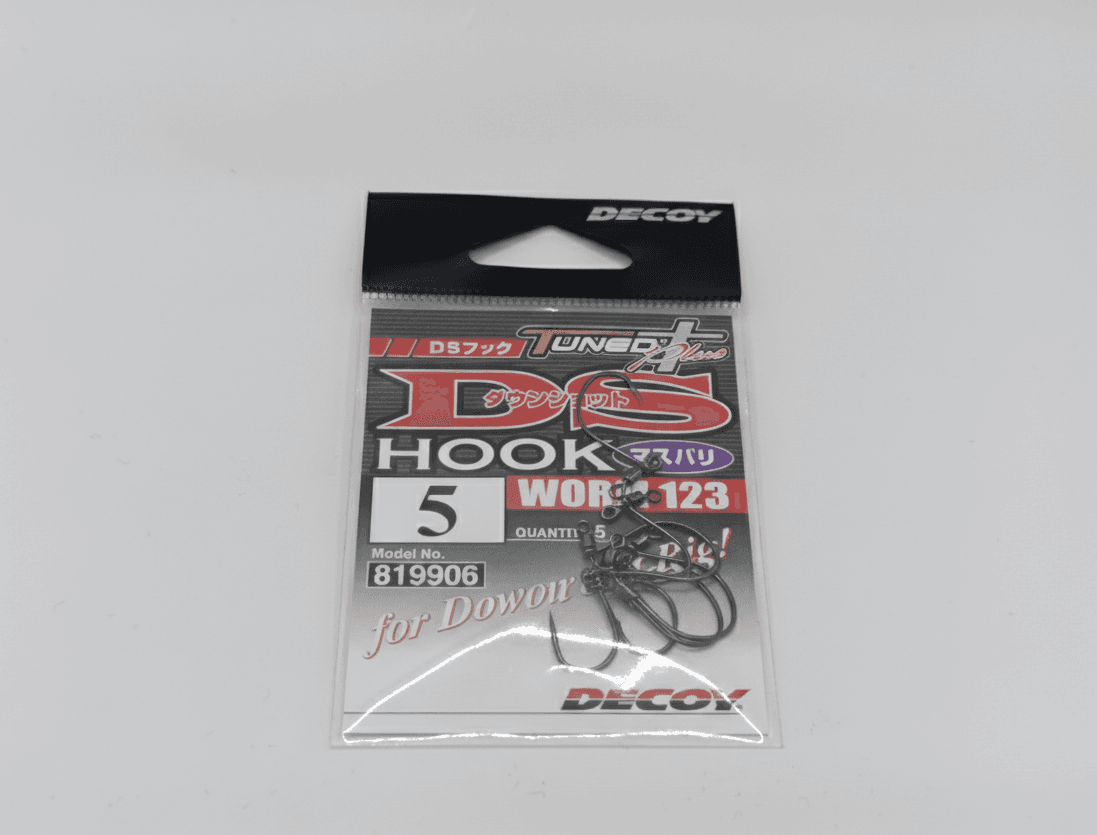
Decoy Worm 123 DS Masubari Hooks
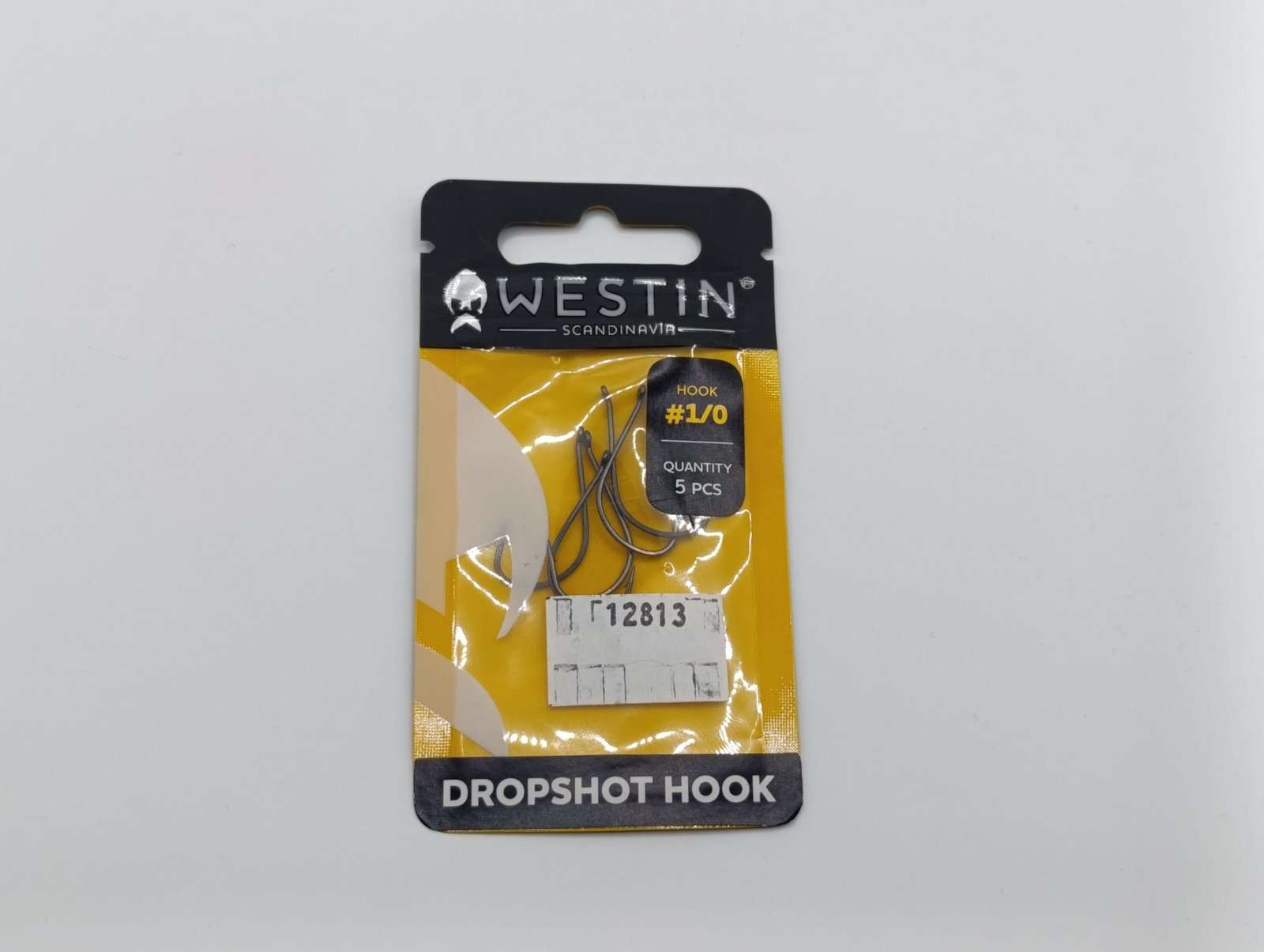
Westin dropshot hook
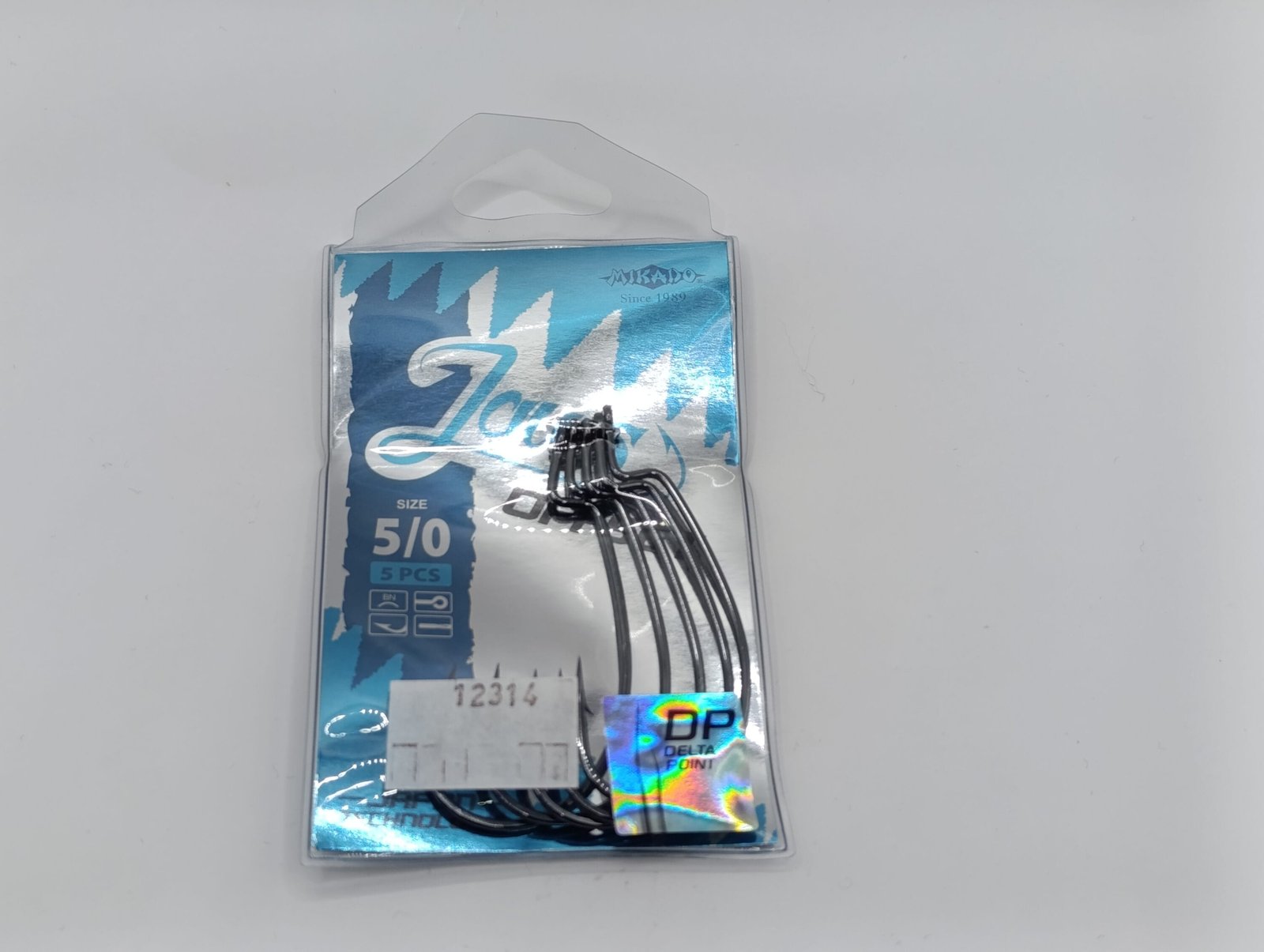
Mikado Jaws offset hooks
Dragon V-Point 1/0 jig heads

Jaxon 100 cm Measuring Mat

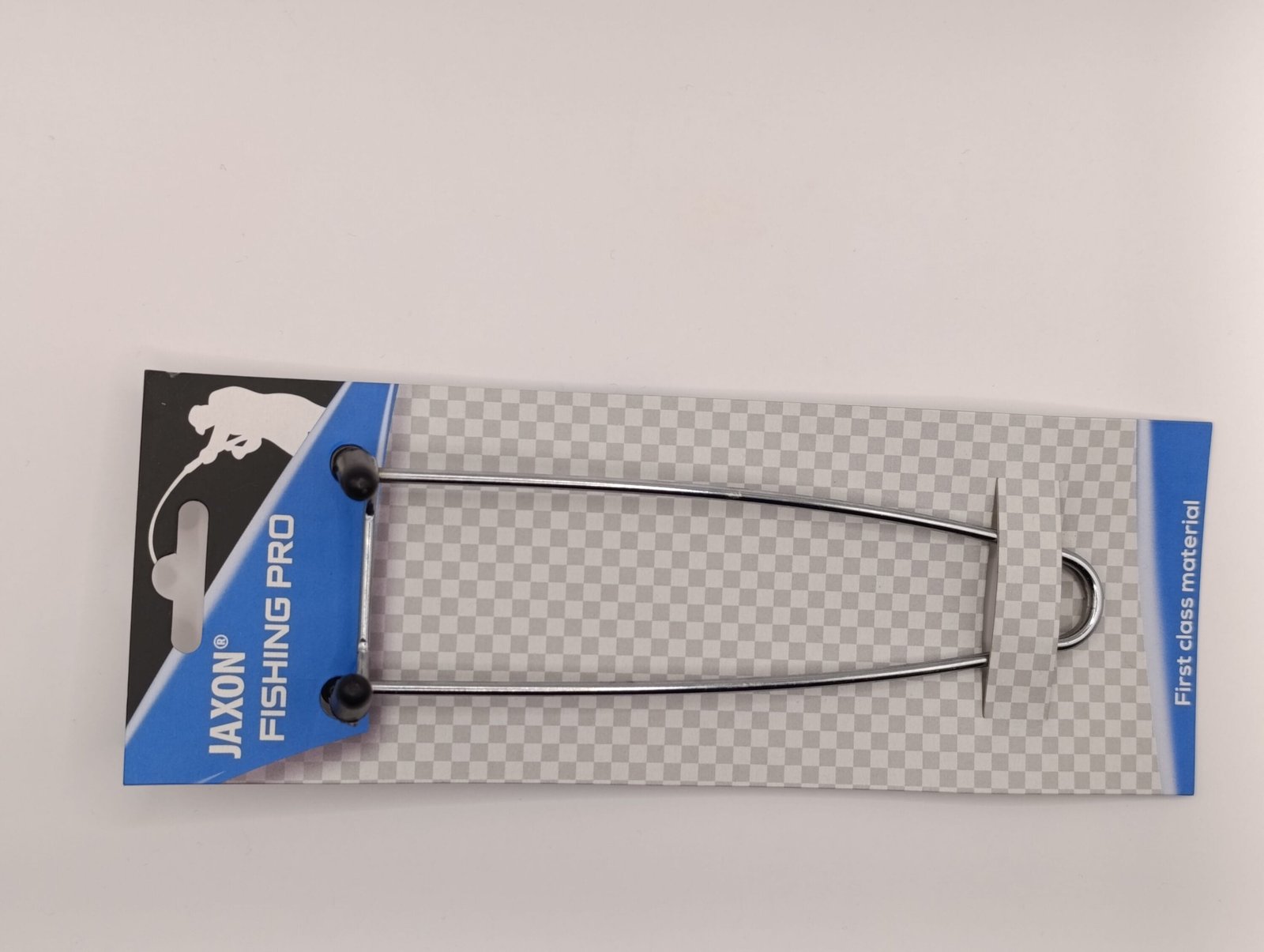
Jaxon Mouth Spreader
3. What to put on the hook? Natural vs. bright presentation
On heavily pressured waters rich in forage fish, there are no miracles – lures in natural colors.
Bleak and roach imitations: Choose softbaits with light bellies, silvery flanks, and a darker back, as well as the iconic color motor oil. They perfectly imitate a disoriented baitfish carried by the current.
Ready for surprises: Despite this, it is always worth having bright accents (chartreuse, fluo) close at hand. Feeding zander can be unpredictable, and in murky water or on overcast days, it is often a neon color that can unlock the fishery.
Dark colors (effectiveness against all logic): Often in murky water or low visibility, very dark lures perform surprisingly well. Deep purple or matte black create a strong, clear silhouette contrast against the water column, perfectly provoking bottom-feeding zander.
Don't know which models and colors to choose for your fishery? Check out our curated selection zander lures.
Zander fishing at dams is an art of patience and adaptation. Remember: read the water, match your lure rig to a difficult bottom, and don't be afraid to test colors – from natural classics to deep black. Changing your approach is often the key to success on pressured water. Good luck and tight lines!