
Finesse or aggression? The key to success in mid-summer
When the water gets warm and the sun blazes, zander can be extremely finicky. Summer fishing requires flexibility from us – sometimes you need to provoke them with aggression, and sometimes almost lull them with finesse. Here is a rundown of our three favorite spinning techniques that can unlock the water on the hardest summer days.
3. Jigging with softbaits: From aggressive drops to total finesse
Jigging is a classic, but its power lies in versatility. The classic lift-and-drop with a heavy jig head works great for quickly covering water and triggering reaction strikes. However, in summer, when fish are "glued" to the bottom, light jig heads and unconventional retrieve methods make a real difference.
The "Quarter-Turn" technique (Bottom Dragging / Ned Rig variation):
A method mentioned by many professionals, involving the use of a very light jig head. The retrieve is limited to just a quarter-turn of the reel handle, followed by 3-4 seconds of a complete pause. The lure barely creeps along the bottom, imitating a dying prey. This is nothing other than finesse. Bottom Dragging (dragging along the bottom), drawing heavily from American Ned Rig. It is deadly effective both in the heat of summer and in winter. If you are fishing in areas full of hard snags, it's worth ditching the classic jig head in favour of softbaits rigged with a single weedless hook – this way you won't lose your tackle on every contact with an obstacle.
Mid Strolling / Bottom Strolling:
Another gem borrowed from the Japanese market is Mid Strolling (known there as Midost). In its original form, it involves slowly retrieving the bait in the pelagic zone with a constant, gentle twitching of the rod tip, which makes the softbait execute a rolling side-to-side action. In zander fishing realities, its bottom variant is more commonly used – Bottom Strolling (or simply Slow Roll). It consists of a continuous, slow retrieve of the bait on a light jig head with a pause made just to make sure the bait has returned to the bottom. This technique works phenomenally well on canals with a constant depth and a reasonably flat bottom profile, where we don't need to constantly adjust the fall over deep trenches.
Heavy bottom ploughing
When finesse fails and lethargic zander don't even think about rising to the bait, it's worth trying a completely different strategy. Important note to start with: this technique requires the right fishery. It works best on a hard and relatively even bottom (e.g., in dredged, flat canal beds). If your spot is a veritable graveyard full of sharp stones and sunken branches – you'd better skip it, otherwise you'll quickly clear out your tackle box.
How to do it right?
- Setup: Rig a purposely overloaded jig head – even in areas with low current, use weights around 15-20g.
- Lure: The key is choosing softbaits, which react to the slightest movement. All kinds of pintails and narrow, subtle-working rippers (e.g., classic Easy Shiners).
- Retrieve: Your task is a very slow, steady line retrieval with the reel, interspersed with smaller and larger, but regular pauses. The lure absolutely must not lift off the bottom.
Why does this work? A heavy lead head dragged this way literally plows the bottom. This creates a distinct plume of sand and sediment in the water, resembling a crayfish escaping along the bottom or an injured baitfish. This rising cloud incredibly attracts the attention of lazy zander and can often provoke them into a very aggressive strike.
2. Koguts: Aggression that awakens from summer lethargy
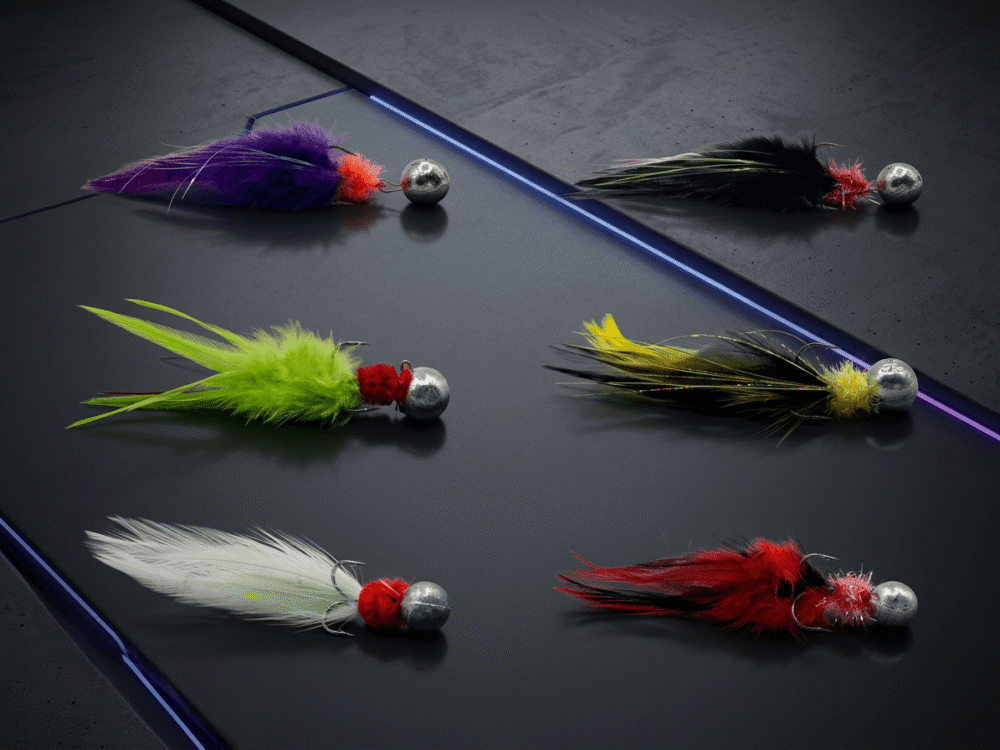
When subtle softbait dragging doesn't yield results, it's time for shock therapy. Kogut jig are lures for special tasks. A heavy lead head and a fluffy feather tail demand a very aggressive retrieve – sharp wrist snaps and hard landings on the bottom. The impact of a heavy kogut hitting the hard bottom kicks up a cloud of silt, which, combined with the pulsing feathers on the fall, can provoke even the most well-fed and heat-exhausted zander to strike. This is a purely reactive technique – the fish strikes on instinct before it has time to think.
If you don't know how to retrieve koguts, I invite you here – we described this in more detail in this post.
1. Drop Shot: A precise sniper for shade zones
At high noon, when the summer sun is at its highest, zander almost always seek relief in the shade. Vertical walls, parked barges, or bridge pillars create small zones of darkness that need to be precisely targeted. There is no better method for this than Drop Shot. Definitely our favorite technique for summer!
Thanks to the sinker resting on the bottom, we can dance the lure in a single, small spot for a long time, playing on the fish's nerves. What's more, Drop Shot allows for easy adjustment of the lure's height on the leader. If electronics (or lack of bites from the bottom) suggest the fish have suspended higher up, we simply move the hook up.
Key Drop Shot retrieves:
- Dead sticking (Fishing motionless): You cast, tighten the braided line and… do nothing. We often forget that too much action can actually scare off cautious summer zander, which ignore unnaturally hopping prey. Instead of aggressively animating the softbait, you let micro-currents give it a subtle, almost imperceptible movement of their own. This is an extremely effective tactic on heavily pressured waters, where the "less is more" rule is sometimes the only way to get a bite. Here, absolutely only use non-action softbaits (slugs, larvae, etc.)
- Steady retrieve with a pause: Gently dragging the sinker along the bottom with long pauses. The lure moves very naturally, hopping just above the bottom.
- The magic of twisters: Though often associated with classic jigging, twisters rigged on a drop shot hook are brilliant in the summer. Their soft tail swims seductively even with absolute minimum movement, which is invaluable during a steady retrieve. Here it is worth making fewer pauses – a twister during pauses, when there is little current, can look unnatural.
Test, mix styles and don't be afraid of extremes – from hammering with a heavy hair jig to several-second motionless pauses. Summer zander can surprise you! Tight lines and have a great time testing these techniques.