
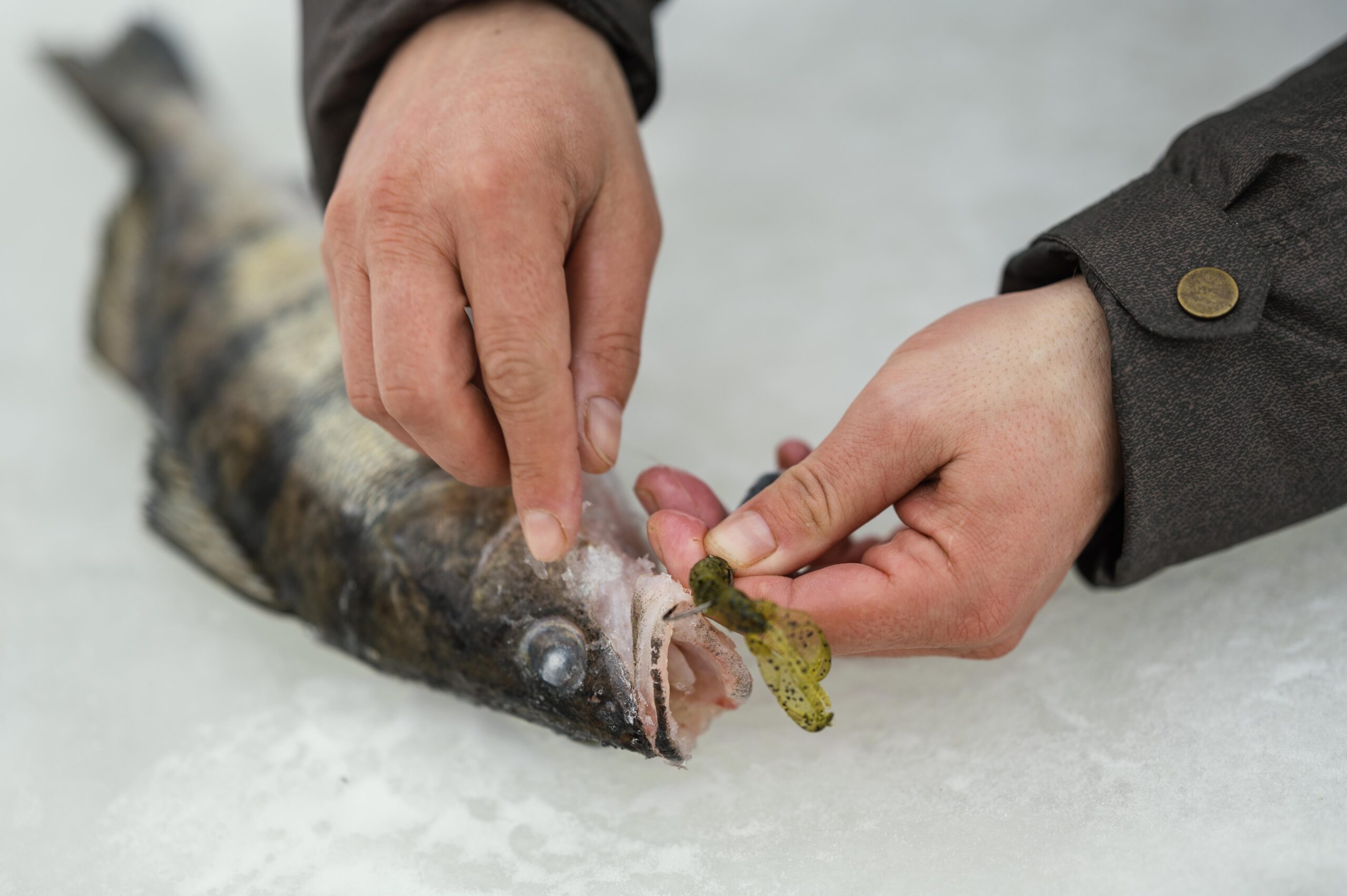
Why dropshot ?
First of all, because once you master it, it will often open the water when nothing else will work. Especially in extreme conditions - mid-winter and mid-summer - it can awaken lazy predators to take. Let's start with dispel a few myths On this technique.
Myth: Dropshot is a technique only for small fish
Absolutely not! Although some of the specimens caught will not be of impressive size, the right choice of lures and their skillful animation can result in real trophies. Some of the largest zanders I managed to catch were taken precisely on dropshot - and that in winter! As for perch, you can expect many pieces over 20 cm, which on an ultralight rod provide incredible fun.
Myth: Dropshot requires specialized and expensive equipment
That's another myth! You can start by using the rod you already have. For perch, it is enough to change the leader to a dropshot with a standard rod used for jig head fishing. To start, you should use the most sensitive tip in your arsenal, and only later consider buying a dedicated rod for dropshot-though it helps, it is not necessary right away.
Myth: Dropshot works only in deep water and from a boat.
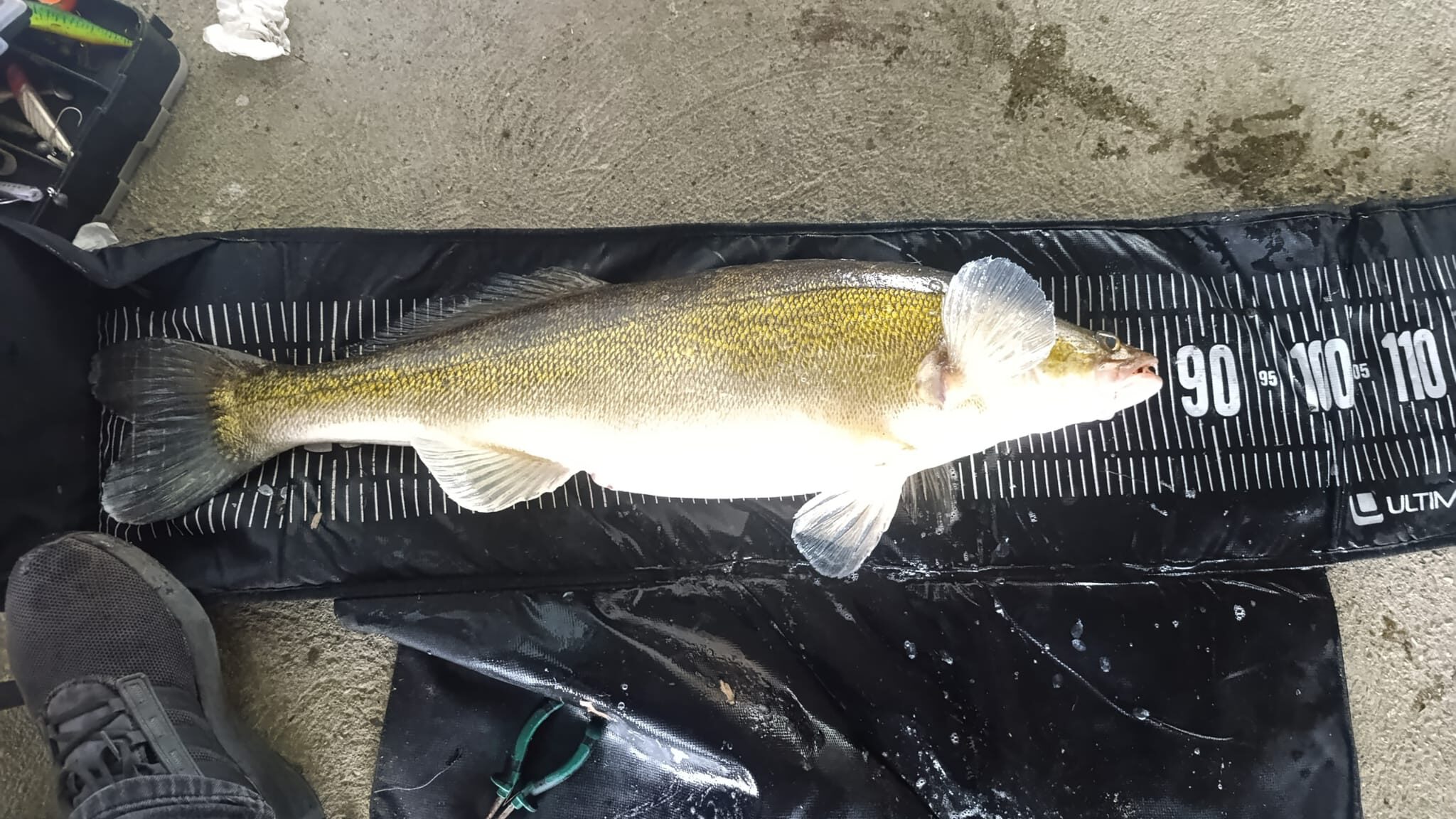
Nothing could be further from the truth! As proof, below is a photo of a zander caught from shore, at a depth of just two meters, thirty meters from the shoreline. This is the best example of how dropshot also works from the shore.
How to get started with dropshot?
To start your drop shot adventure, you really don't need much. Hooks and weights are enough, with which you can easily prepare a leader at home. They work great Jaxon weights available in our store - they have a very good value for money, and in this technique we lose leaders quite often, so it is a practical choice.
As for the rod, just use a fine rod from your kit. Choose it according to the depth and nature of the fishery: on a hard-flowing river, a weight of about 20 grams is useful, and on a shallow lake, 5 grams will suffice.
After tying the leader, set the sinker at the appropriate height - usually 25-40 cm above the bait - and attach the rubber band according to its size. Small lures, such as Mikado Fish Fry, preferably worn behind the headstock. With larger models, such as. Qubi Big Fat Bug, offset hooks will work great.
And to find out where and how to fish with such a set, keep reading our dropshot guide.
Fishing from the shore - where to look for fish when dropshot fishing?
When fishing from shore, finding the fish is key. Dropshot works best in places with varied bottom structure and vertical obstacles. It's a good idea to focus on features such as stakes submerged in the water, piers, dams or boats that stay in one place for a long time. Perches are particularly fond of such locations-as relatively slow predators they choose places where obstacles make it difficult for their prey to escape. Interestingly, their potential victims also prefer these locations, seeking shelter from predators. It's a fascinating paradox in which both prey and hunters have their reasons.
Sandpiper - where to look for it for dropshot?
Sandpipers prefer shady places that protect them from light. Ideal conditions are provided by the legs of bridges, the shadow cast by the structure and vertical obstacles such as stakes in the water. When fishing rivers and canals, it's a good idea to focus on areas where the bottom drops sharply near the shoreline. Sandpipers are often on the side where such structure creates shade. Dropshot is especially effective during the day, when the fish are less active, so it is worth choosing places with a hard bottom-that's where zanders are most likely to stay.Spend 15-30 minutes for a quick check of a particular spot, and if it does not bring results, move on. And if you do not catch anything, it is worth coming back later-maybe the fish „fired up” at the earlier spot!
How to guide the bait?
The possibilities are many, and it's hard to do it completely wrong. Here we will touch on some of the techniques I use most often.
Jerking the weight along the bottom while gently twitching the stick is one of the simplest yet effective methods. There are several reasons for its effectiveness. The sinker induces a streak of silt, which to the zander looks like fish feeding on the bottom, attracting his attention towards the lure. Another factor is the slow work of the lure - this method gives the impression of a fish swimming without awareness of the predator next to it. Sandpipers, when they prefer an easy target, often respond to such guiding.
What does it look like to fish with such a set? After casting the lure, let the weight sink to the bottom and raise the rod tip to eye level. Pull the bait very slowly, regularly gently jerking the rod tip. The animation of the rod tip may be difficult, but with time you will become proficient. To begin with, choose a heavier weight - this will allow you to better control the movement of the lure. During the retrieve, when you feel the tension of the line and contact with the weight, with a gentle flick of the wrist lower the rod tip and then raise it, without pulling the weight away from the bottom. This will make the lure gently sink and then flow, giving it a more natural action. After a few turns of the reel, stop for a few seconds. This is when the bite often occurs. You can move the rod tip or leave the lure stationary - it's worth experimenting, as fish preferences change depending on conditions.
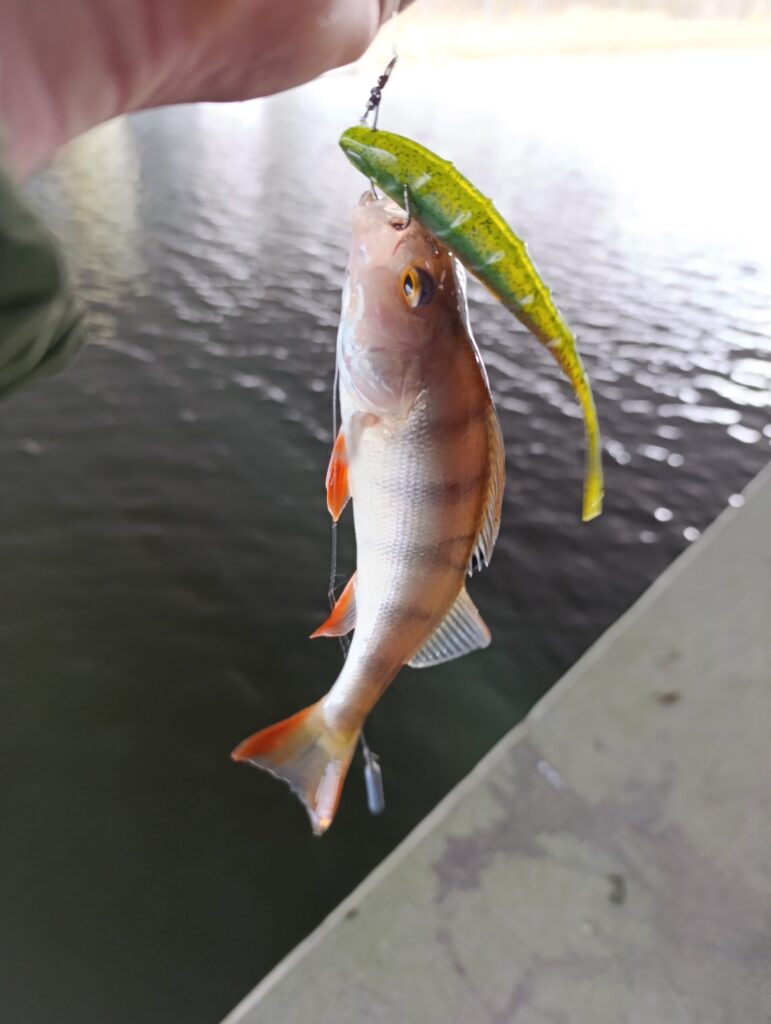
Dropshot with twister bait is another interesting option. Twisters are available that imitate small fish, as well as models that resemble lizards and other animals. It is worth trying different shapes of sizes and colors.How to use them on dropshot? Put the small ones on the hook by the head, larger ones you can armor offset as well. Then put on a not too large sinker and let it sink to the bottom. Reel the lure, experimenting with speed, try to keep the sinker on the bottom. For twisters, pauses in the retrieve should be very short or none at all. Twisters lose their attractiveness when they stand still, arousing distrust in fish. Here, the sinker must not be too heavy, especially if you are using braided line, because a heavy load can cause unnatural movements of the set.
Finally, my favorite technique. A technique that allows you to work in particularly attractive places for as long as you want. Fishing for hot spots is what dropshot reigns supreme in. Everyone has their own spots where they particularly expect fish. Most techniques, especially when these spots are close to the angler, do not allow you to fish them accurately. The technique discussed here will allow you to finally give them enough attention. How to do it.
To begin with try to drop a little behind your target. When sinker falls, pull it up slowly to the spot, if you want, you can move the rod tip while guiding. When the lure is where you want it, tighten the line and stop the retrieve. Gently move the rod tip a few times so that the rubber starts twitching like a dying fish. Don't do it too fast or too many times (2-7 twitches will be optimal). After these movements, stop the lure for a few seconds. This stop often results in a bite. If it does not occur again twitch the rod tip. Repeat the combination several times, varying the length of the series of twitches and pauses, and if a bite does not occur, make half a turn of the reel. After the rotation, again hold the lure in place and repeat the movements. If the fish do not respond, try fishing more or less aggressively - in most cases, beginner anglers lead the lure too fast. Remember that you are supposed to imitate a moribund fish, not a fish with an epileptic seizure. Another thing we should experiment with is the weight setting. If you use special dropshot weights, you can easily increase their distance from the hook. Move it further to raise the bait higher - a great way to avoidance of vegetation, which can obscure the set.
Sometimes raising the height by a few centimeters will make more light fall on it, making it more attractive or lift it above the flowing silt, improving visibility for fish. I generally start at a height of 25-30cm above the bottom. If you are fishing from the shore, it is not worth going below 15cm, as your line does not fall vertically to the bottom, so your hook will be closer to the bottom.
When to use dropshot?
Dropshot, as a finesse and slow technique, has its place in specific conditions. During the peak hours of feeding, it is worth focusing on classic methods, and leave dropshot for moments when this technique really stands out.When is it worth reaching for it?
First of all, when Predators are lazy and reluctant to move after the fast-escaping bait, regardless of its attractiveness. That's why dropshot works great for south, When the fish are resting. Then you can precisely feed the lure under the very mouth of the zander and stimulate it to attack. If you have so far thought that after 10 o'clock in August there is no point in fishing for zanders, I have good news - it is enough to know where they rest to successfully outsmart them!
Dropshot also works well for opening a dam or dam, when a wave of water rushes into the fishery. You can choose two strategies: a heavily weighted rubber for aggressive lure action, or a dropshot that remains stable near the bottom, even in dynamic conditions. Predators in the chaos are looking for injured fish, and the jittery swallow placed between them is an excellent chance for zander and thick perch.
However, the best time for dropshot remains winter. Since November, this method has become a reliable way to catch big zander. If you are not convinced, try dropshot in the winter-z big bait and fine animation You have a great chance for fish over 70 cm. In winter, it is also worth paying attention to the right equipment-swallows over 12 cm require a rod with sufficient casting weight to comfortably handle them.
There is nothing left to do but to try dropshot at these moments and see how effective this technique can be. With this solid dose of dropshot knowledge, you're ready to set up your kit and catch your first fish using the vibration method! Good luck-make every bite unforgettable. And I, engrossed in writing about this technique, can almost feel the vibration of the rod... it's time to move to the water and feel it for real!
 Polish
  English
  Dutch
Dutch