
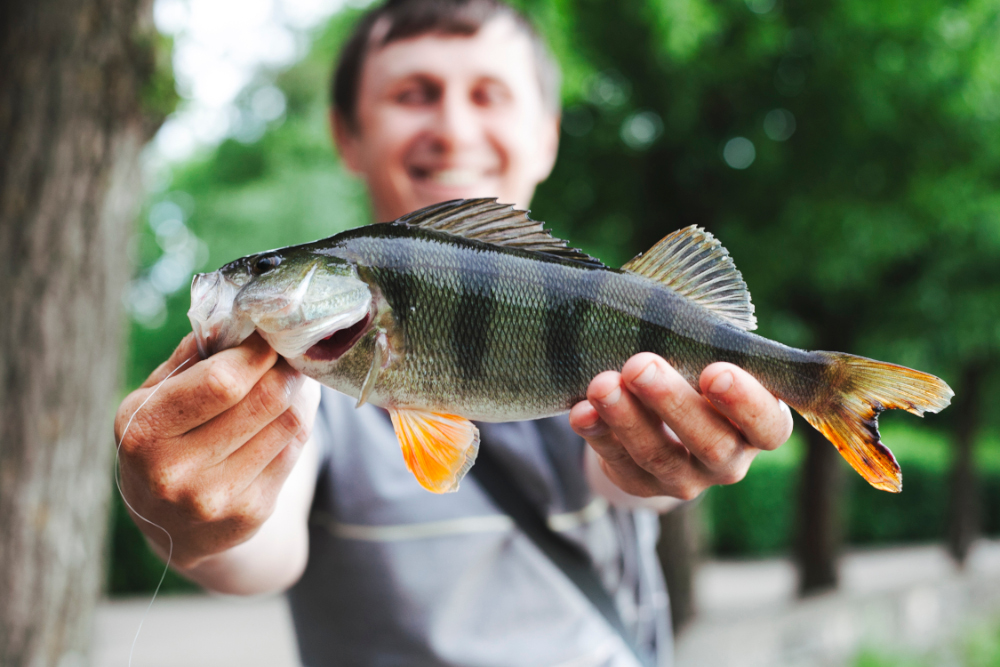
Perch fishing is one of the most sporting forms of fishing. Although they are not impressive in size, they are a frequent target of fishing competitions. There are many reasons for this, but my favorite is their prowess - these small predators can provide truly exciting moments.
Although they do not match the size of other carnivorous fish found in Dutch waters, the fight with perch can be just as exciting. Their way of fighting is very characteristic - instead of running away like pike, they aggressively jerk their heads. This gives a unique feeling on the rod, especially when fishing with an ultralight set.
Another reason for their popularity in sport fishing is that they occur in flocks. Such a flock, known as a nursery, can number more than a dozen individuals in a small area. If you come across one, you have a good chance of having a successful day. The fish in a flock are usually of similar size, so if you hit only the little ones, and you are aiming for records - it is worth looking further. There are exceptions: among the twenty-centimeter perch there may be pieces measuring more than thirty-five, but this is rather rare.
Perches are also extremely ubiquitous. If you have a canal near your house, there's a good chance they're hanging out there, too.
When to go perch fishing in the Netherlands?
Outside the protection period (In the Netherlands it is the period from April 1 to the last Saturday in May) - always. Any season can give us great specimens. Of course, you need to be able to adapt with your guiding technique, but a lot of the principles remain the same.
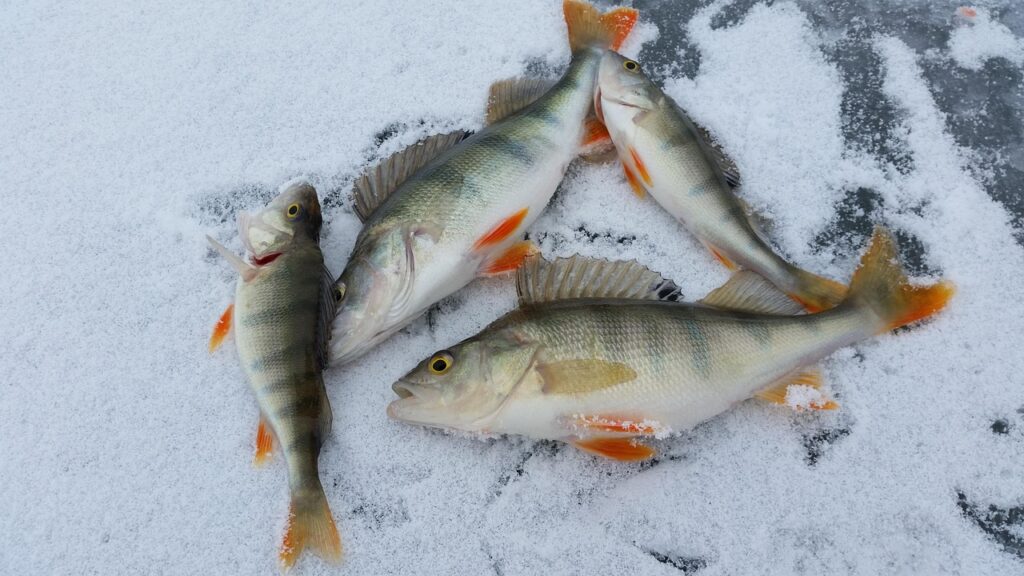
Early morning and evening are the best times of day to find perch. You can also boldly fish at noon, and you will probably still catch a few fish, but the east and west area works best. Go to the water in the morning and evening -. every canal and lake is different, check when they take best at your place and remember - this can also change with weather and season. In winter, it's better to go when the water has already warmed up a bit after the night. It's also worth avoiding extreme heat and cold, although the latter, as you can see in the photo, bothers perch less.
Small water kit.
When fishing in small Dutch canals, it is advisable to use only ultralight rods. Perch are quite skittish, so it is best to choose light-weight sets. Even a five-pound head can generate too much noise in a small tank. Personally, I use heads weighing from 1.5 to 3 grams and lures up to 6 cm. A rod with a cast of up to five grams is completely sufficient for this type of fishing, and exceeding seven grams makes the rod lose its sensitivity when using the lightest weights.
For such a rod, it is worth choosing a reel that properly balances the set. I prefer models in sizes 1000/1500, on which I thread a thin braid. This is especially important because of the wind - the thinner the braid, the less it bulges, which is very important in Dutch conditions.
At the end of the set always have fluorocarbon leader - It will reduce visibility and protect from abrasion.
Where to fish in the canal ?
Before you start successfully fishing for perch in your canal, it's worth taking a moment to get to know it. You can use Google maps or, which is my favorite option, take a walk by the water. Focus on areas that are likely to attract perch-.Boats, stakes, bridges, overhanging tree branches. It is always worth throwing any Locks and platforms for parking boats. Less obvious, but equally effective places, are minor tributaries, where the water carries insects and other food sources, encouraging small fish to hang around. And where there are small fish, there are predators.
In places such as bridges and stakes, it is worth fishing as close as possible to the obstacles. In the beginning it is good to use cheap lures-the novice angler often hits the very obstacles and loses his kit. This includes overhanging tree branches, which are easily snagged when casting. And speaking of trees, I have a piece of advice from my own painful lesson: never try to retrieve your lure by climbing a tree-I myself once fell into the water in December, and it was not the most pleasant experience.
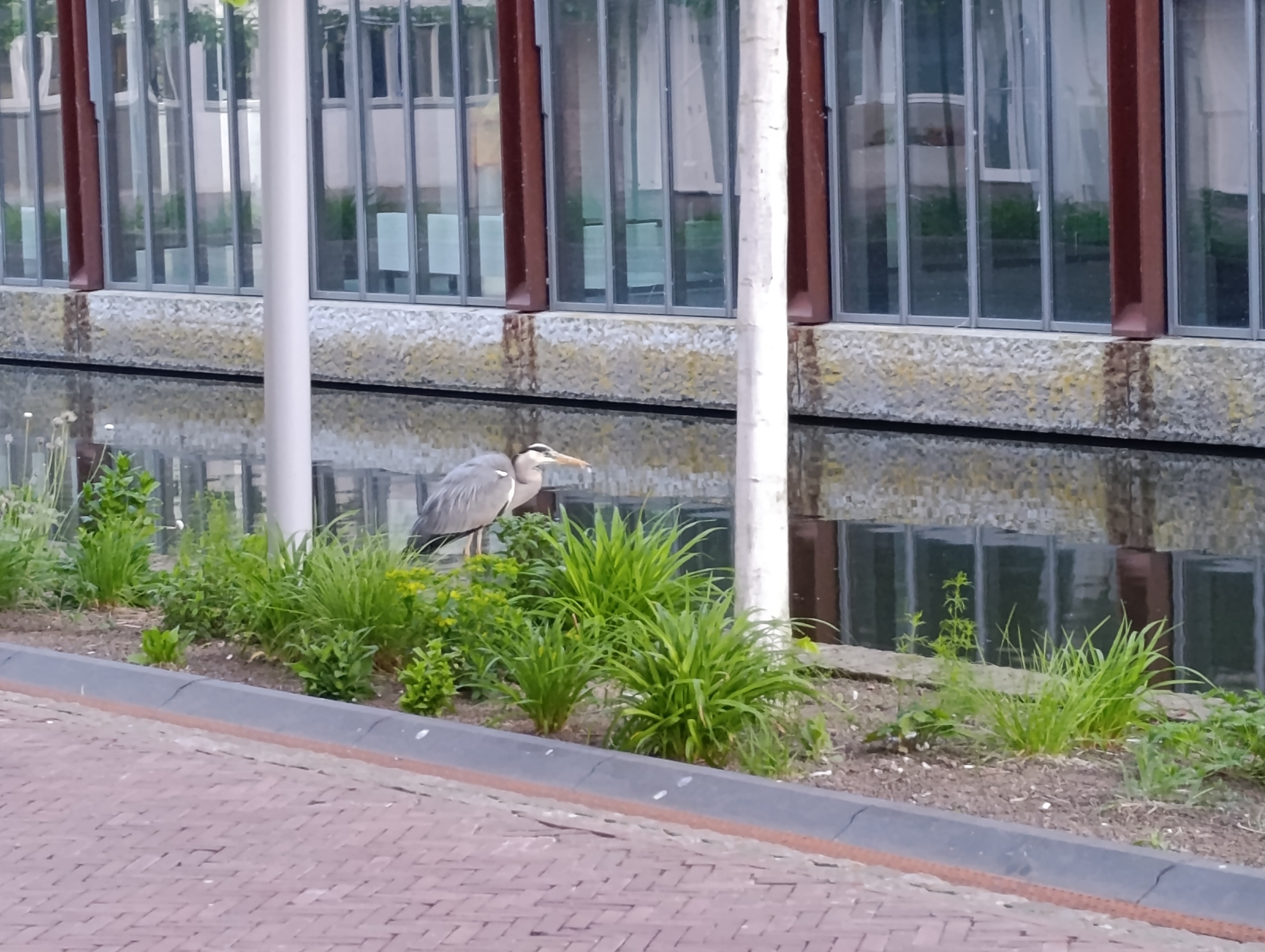
If your canal is frequently used for whiting fishing, it is worth looking at these sites. Large quantities of bait attract small fish, which in turn attracts predators. A good way to find potential fishing grounds is also to watch for birds of prey - they tend to hunt where there is food, and there are often perches waiting below.
Which techniques to choose?
Here it all depends on the conditions. In general, I always carry several leaders with medrop shot, for fishing hot spots. In addition, of course classic jig heads AND CHURCHES. Especially the latter come in handy when there are sticks on the bottom of the channel (which also herald a good spot!). Often reliable turn out to be spinning tails - Guide them using the classic fall method, but adjust the speed so that you can feel their work when lifting from the bottom. When you see perch feeding on the surface, the following will work great wobblers and spinners. As you can see - there are many possibilities. Above all, use what works for you. Every water is different, and every day perch seem to change their tastes.
Something that for me has greatly improved the results is adding breaks to the bait animation. First of all, it works in the descent, where you should let the lure rest on the bottom for a few seconds, then pick up and repeat the series. Here you need to be very focused - often you will only feel a dull resistance, similar to a hitch during a strike. This also works with some crankbaits. Speaking of crankbaits - it also works great with these twitching. This technique involves twitching the rod while guiding the lure, making its movement less uniform.
Another interesting variation involves spinnerbaits and it is this irregular driving pace. It's worth leading faster for a while, only to slow down a moment later. But remember - a spinner needs to maintain a certain speed to keep working, try to constantly feel its work on the rod tip. And most importantly - change colors, perch can be really chimerical and respond to only one color on a given day.
Richer with this basic knowledge and equipped with your ultralight rod, you can boldly head to the surrounding waters in search of striped predators. I hope you will catch many beautiful specimens, which will only strengthen your passion for catching these brave fish.
P.S. Perch have great flavor, but keep in mind applicable protective dimensions. Let's take care of their population by following the rules, even if we want to check their taste. I wish you successful fishing and a great day!
 Polish
  English
  Dutch
Dutch